Design Specifications
Pricing Info
The pricing for Titanium is based on:
- The model volume: The volume of your model is used to calculate the material cost (mm³)
- The box around your model: An imaginary box around your model determines how much space your design will take up in the printer (X * Y * Z = mm³)
- The model surface
- The finish selected
For Titanium, we charge a minimum price per ordered piece. Unlike the startup cost (which is applied to most materials), this cost vanishes when the price is higher than the minimum price. If you order two or more copies of a model, the price automatically decreases because the preparation of multiple copies can be carried out more efficiently.
Typical Use
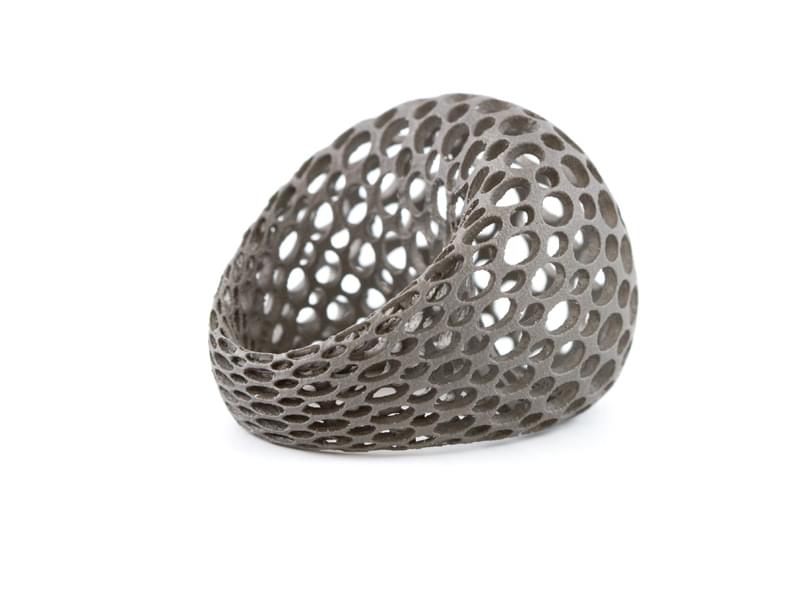
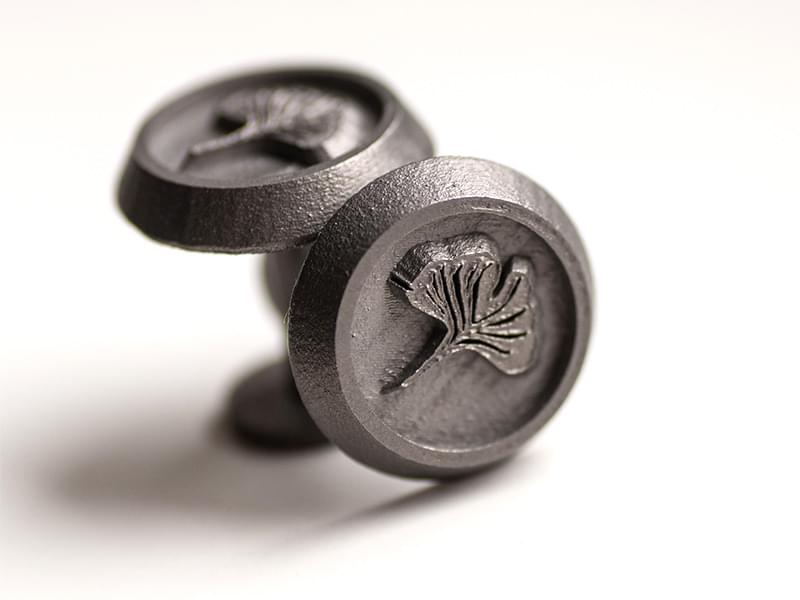
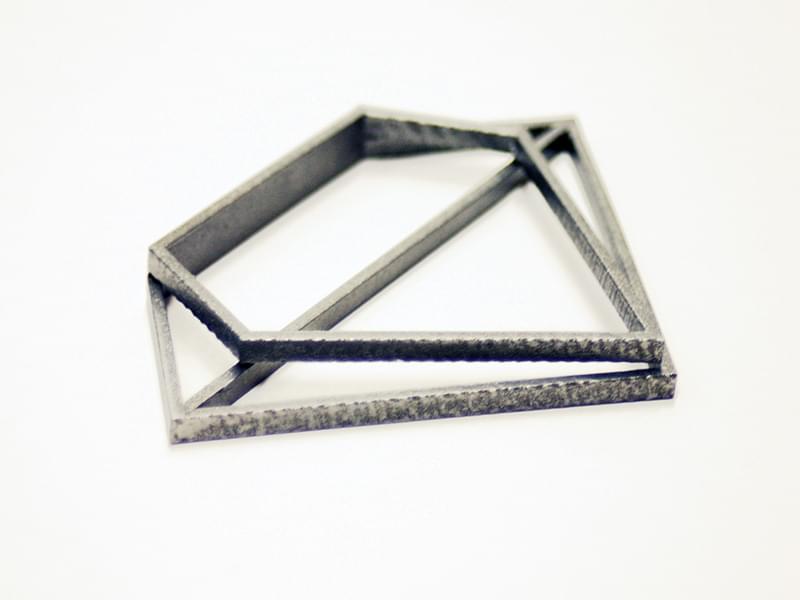
Titanium can be used for spare parts, jewelry, and watch parts (e.g. cases and dials).


Technology
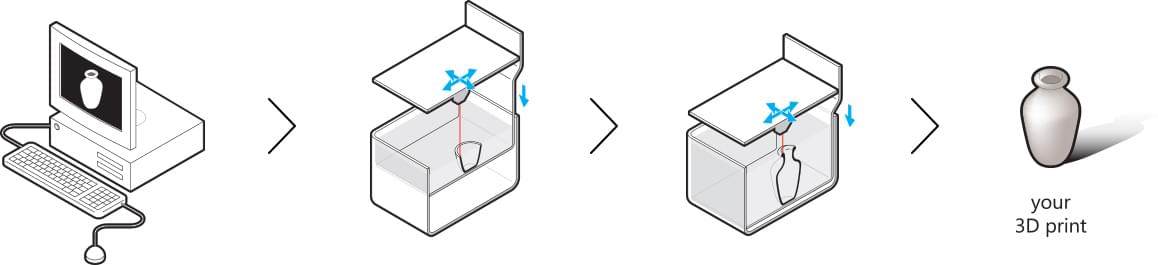
Metal 3D Printing – also known as Direct Metal Laser Sintering (DMLS) and Select Laser Melting (SLM) – is a laser-based technology that uses powdered metals. Similar to Laser Sintering, a high-powered laser selectively binds together particles on the powder bed while the machine distributes even layers of metallic powder. Support structures are automatically generated, built simultaneously in the same material and are later manually removed. Once complete, the part undergoes heat treatment.
Additional Information
- Titanium is a hypoallergenic metal which makes it perfect for jewelry if have a metal allergy or sensitive skin
- It's possible to make non-rectangular, organically shaped objects that are not able to be produced by any other process
- Because supports have to be removed manually, some evidence of removed support structures might remain on your model
- Any “overhanging” structures (e.g. the underside of a table ) or angles smaller than 35° will tend to be less attractive with this process
- The ideal shape to make with this process is that of a mesh. It’s easy to design and delivers the best results
- Titanium consists of 88-90% titanium, 5.5-6.75% aluminum, and 3.5-4.5% vanadium
Learning about our materials is one thing, seeing and touching them another. That's why we've designed sample kits based on our Periodic Table of Materials.
Titanium Matte
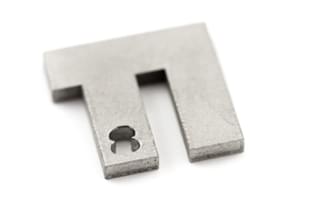
Includes a matte Titanium sample.